Wednesday, September 09, 2009

Labours
Green
Shoots of
desperation


Why Labour spinners
are so desperate to talk up
the economy.


A major factor prolonging a recession is a lack of confidence. Consumers and businesses who feel that bad times still lie ahead will tend to spend less - creating economic conditions of poor demand in which recovery becomes very difficult. As a result of this leaders, the media and most business institutions have an interest in 'talking the market up' even when often there is no uplift at all.

Norman Lamont famously got into trouble for talking up the economy even as the 1990's recession was just getting going (In October 1991, based on CBI and Institute of Directors business surveys, he said "what we are seeing is the return of that vital ingredient - confidence. The Green shoots of economic spring are appearing once again).

In January this year Labour spin doctors were forced into a massive rescue operation when Baroness Vadera claimed there were 'green shoots' of recovery in the air. The remarks came on a day when UK firms announced large-scale job losses and share prices slumped by almost 5%. The economy then plunged into a record second quarter recession, a steeper faster decline than any recession since the 1930's depression.

Of course for Labour there is another reason to talk up the economy - an impending election. Labour have built their entire election strategy on the basis that if the public can be persuaded that the 'recession has ended' they might just get some credit for it come polling day.

Dr Pedrick Friend has joined in this week through the local newspaper, here he is making utterly ludicrous statements about the economy which, even though the claims are so wrong they insult our intelligence, cannot be allowed to go uncorrected.

He says in his letter : "Economic green shoots are all around, economic confidence is surging as the stock market rockets, house prices recover and the manufacturing sector see more orders."
  • House prices have not recovered - they lost at least 20% last year and are stagnant.
  • Shares have not 'rocketed' either - the stock market has climbed back to where it was in 1997 when Labour came to power
  • Manufacturers are not 'seeing more orders' The CIPS monthly index of manufacturing orders fell in August.

The problem with calling the bottom of a recession is that often the pain is felt by people long after the technical period of economic contraction has finished. Although Vadera was wrong, Lamont wasn't. The 1990 recession ended -as he said- in 1991. But it was 1996 before there was a return of 'the feel-good factor' and consumer confidence came back.

But another issue is going to make this recession much harder to call anyway. 1990 and 1981 were recessions that had a distinct beginning, middle and end. They were 'U' shaped where economic activity fell, stabilised for a bit and then grew again.

But in the 1950's and 1970's we had a series of 'W' shaped recessions, where economic conditions meant that the recovery created another overload, creating another recession. We used to call this 'stop-go' economics and it's main cause was inflation. Every time the economy started to expand prices and then wages shot up, then the pound would fall as its value become less compared to other currencies, then interest rates had to go up and the whole economy ground to a halt again.

Pedrick-Friend refers in his letter to the Governments actions being ' a sensible Keynesian fiscal boost'. In fact their plan involved devaluing the pound, doubling the national debt and then printing £200,000,000,000 to fund a Government spending spree. The inevitable inflation this policy has unleashed will devalue savings and drive interest rates upwards. Higher interest rates will impact on the economy at just the wrong moment, causing pain to millions of home owners, it will also divert billions that could have been spent on public services into paying interest on the trillion pound National Debt we have accumulated.

Maynard Keynes will be turning in his grave.


Monday, September 07, 2009


Have the media written Labour off?

There is a new trend emerging in the media when it comes to discussing politics. More and more of the thousands of articles, news items and features written in newspapers and on telly are increasingly working on the assumption that Labour will be out of office next year.

I first noticed this on Newsnight a few weeks back in an interview when Paxman dismissed a cabinet members plans for next year with a rather extra sneery 'well it won't be you in office by then, will it?'- but it has now become the language of interviewers and commentators across the media.

Of course with time running our before the election and with Labour still polling in the mid 20's it is hardly surprising that people are beginning to take a Cameron victory for granted. But what is interesting to me is that Labour seem to be doing so little to dispel the idea, it is almost as if the media are being given the impression by the Cabinet and senior party officials that Labour know their time is up.

This comes back to leadership. Even in the dying days of his premiership John Major continued to motivate and drive his party, as did Callaghan when defeat looked likely in 1979; whereas it seems that Gordon Brown has neither the energy or the oratory to give his troops the morale boost they need.

Just in the last 24 hours:

Peter McKay of the DAILY MAIL: “Why Gordon Brown could walk before he’s pushed out”
http://www.dailymail.co.uk/debate/columnists/article-1211580/PETER.html

GEORGE PASCOE-WATSON, Political Editor of THE SUN: “Ministers believe Gordon’s doomed”
http://www.thesun.co.uk/sol/homepage/news/2625058/Cabinet-ministers-say-Gordon-Brown-cannot-cling-to-power.html

Andrew Porter, Political Editor of the TELEGRAPH : “Gordon Brown warned he’s ‘meekly’ accepting defeat” :

http://www.telegraph.co.uk/news/newstopics/politics/6146193/Gordon-Brown-warned-hes-meekly-accepting-defeat.html

Jackie Ashley, of the Guardian "A Tory dystopia looms, yet ministers meekly sit and wait"

http://www.guardian.co.uk/commentisfree/2009/sep/06/election-conservatives-labour-recession-brown


It is particularly fascinating to watch the leftwing media (including the BBC) seamlessly move from 'will Labour win a fourth term?’ in 2005/6 to ‘can Labour win a Fourth term’ in 2007/8 to ‘what will happen to Labour when it loses?’ in 2009.

Never mind that there is a whole new right of centre agenda going on which is fascinating, genuine news, and could have massive implications for social and economic policy for twenty years or more, the BBC are far more interested in inviting several left-wing commentators into the studio to argue amongst themselves about the future of Labour.

And even as Cameron settles in to No 10 and ushers in an entirely new chapter in British political history I expect the Guardian/BBC will still be agonising over ‘can Labour ever win again?’


Wednesday, September 02, 2009


Weasel words on Lockerbie
I am still reeling from the interview with David Milliband on the Today programme this morning.

Not since Michael Howards notorious Newsnight clash with Paxman in 1997 (when he simply would not give a straight answer to the question 'did you threaten to over-rule Derek Lewis ?' even when asked by Paxman thirteen times) have I heard a politician evade, swerve, obfuscate and ignore a perfectly simple question put by an interviewer.

What Evan Davies was asking was simple enough. In papers released yesterday it became clear that foreign office minister Bill Rammell had told the Libyans that Gordon Brown and Milliband 'did not want to see Al Megrahi die in prison' all he was asking was 'is this true?'

Milliband wriggled and wriggled, he darted this way and that but he would not give a straight answer.

I wonder why?

The statement was lifted from minutes of a meeting between Scottish justice ministers and a Libyan delegation on March 12. These recorded how Abdulate Alobidi, the Libyan minister for Europe, had relayed details of a visit to Tripoli the previous month by Bill Rammell, then a Foreign Office minister, to discuss a Prisoner Transfer Agreement (PTA).

“Mr Alobidi confirmed that he had reiterated to Mr Rammell that the death of Mr Megrahi in a Scottish prison would have catastrophic effects for the relationship between Libya and the UK,” it stated. “Mr Alobidi went on to say that Mr Rammell had stated that neither the Prime Minister nor the Foreign Secretary would want Mr Megrahi to pass away in prison but the decision on transfer lies in the hands of the Scottish authorities.”

What is abundantly clear is that the Libyans were applying a great deal of pressure over Megrahi - implying that trouble would follow if he died in prison. Clearly the Government were absolutely convinced that this would be a problem and were desperate to get the ailing man home as quickly as possible.

Aside from the accusations of giving way to threats from Libya, general bungling, double dealing and various 'oil for terrorsts' consipracy accusations there is something else that troubles me even more.

This is a Government that has infringed our civil liberties like no other in peacetime. British citizens are routinely being bugged, monitored, investigated and imprisoned without trial -and occasionally tortured abroad, or shot dead on the tube, and all in the name of a 'war on terror'. Yet the one man we have so far managed to catch and prosecute for actually carrying out an international terrorist murder was released after a derisory ten years in prison.

Labour has a lot of form on this. Early release of prisoners has been a constant activity since 1997. No other Government in British history has released as many criminals before their sentence has been completed. No other Goverment has been responsible for unleashing unrepentant violent offenders onto our streets to offend again. No other Government has such a shameful record of releasing murderers and rapists out of custody early who have gone on and murdered and raped again.

This is New Labour. "Tough on crime, tough on the causes of crime" - but soft as butter on the criminals and terrorists who are responsible.

Tuesday, September 01, 2009


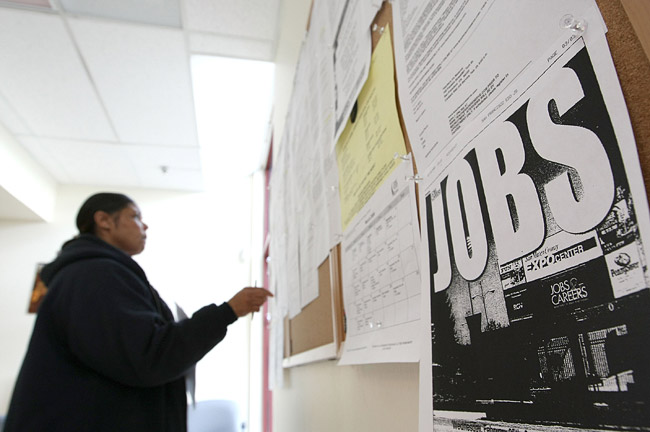
Back to work today (for some).

September 1 marks the end of the Summer Holiday period and a return to work for millions of people who have either been on summer leave, or working in half empty offices and factories as their colleagues take time off.

However this autumn there will be a lot fewer returning to work than last year (and last year was the worst for a decade) and many people will be working in offices half empty as a matter of course from now on as the recession creates more and more empty desks and vacant workspaces.

The Government admits unemployment is rising, but is still in denial about the scale of the problem.

The Chartered Institute of Personnel and Development (CIPD) is keen on broadening who is included in UK unemployment figures. They argue there are large numbers of people who should be counted because they say they would like to work but are considered ‘economically inactive’. If they were included in the count the figure for UK unemployment would rise to more than 4.5m. Even official figures agree that already nearly two million children now live in workless households, shattering Gordon Brown's pledge to halve child poverty by 2010.

The Government claimant count, which measures people who are actively claiming Jobseekers Allowance (JSA), as opposed to the unemployment count that includes people who are unemployed but not signing on, is the published measure of unemployment.

The two different ways unemployment is calculated in the UK relates to the different people included in the counts. Key to this is the group considered ‘economically inactive’ and so not included in the 'official' figure of 2.43m.

In the three months to June, unemployment rose by 220,000, but in July the number of people signing up for unemployment benefits and contributing numbers to the claimant count rose by just less than 25,000.

On this basis there are more than 2.1m “hidden jobless” who when surveyed say they want to work but are not claiming JSA. On top of this there are around a million people currently working part time because they can not find full time work.

Of course every obstacle imaginable is put in the way of people trying to claim jobseekers allowance to keep the numbers down, and in many cases other benefits become available that pay more and encourage people to 'sign off' the register. These include various training programmes, and sickness and disability benefits.


There is a lot more prosperity about than the 1930's and general living standards are far higher on average, so I doubt if we will see soup kitchens, but in my view this recession will create unemployment unprecedented in scale - perhaps as many as 7m Britons capable and willing to work will be without a job at the peak.


And unlike the unemployment of the 1980's which affected the country unevenly (some areas where coal and steel had been the backbone of the economy were blighted where other parts of the UK were relatively unscathed) this unemployment will affect the whole country.


One part of the solution to this is to create a lot more flexibility in the labour market, particularily for very small businesses. Currently the most daunting leap any business makes is when it goes from one employee to two. The hurdles a small business needs to leap in order to employ their first person is mindlblowing, ranging from the need to set up an expensive and hard to operate PAYE system through providing pensions and then navigating what is now a minefield of unfair employment legislation.


Hardly suprising therefore that a record number of one man businesses are staying one man, but if every sole trader employed one young person as a trainee our youth unemployment crisis would end overnight.

Monday, August 24, 2009

Not a good time to be Scottish.

Before I write another word I must point out that while I am not Scottish, many of my best friends are, and I can never remember a time when they are less proud of the fact.

As one of them said to me this weekend, "I am surprised you will even still talk to us, much less want to keep us in the Union. First we demanded and got extra MP's, then special treatment by way of devolution and then extra money from you so that our old people get care your old people do not. Then we foisted on England a Scottish Chancellor and Scottish Prime Minister who between them have ruined a perfectly good economy and run up debts you English will be paying back for 100 years, then our greedy and stupid bankers bought out your Nat West and the Halifax and promptly bust them, too; requiring an expensive bail-out by another Scottish company, Lloyds TSB which then also needed billions from English taxpayers to avoid going bust."

"Then, if all that were not enough, at a time when the 'war on terror' has enabled the Scots run English Government to take unprecedented levels of invasion into your private lives, take record amounts from you in tax to pay for it and caused the death of nearly 500 soldiers in Iraq and Afghanistan we decide to release the highest profile terrorist ever convicted, making British justice a laughing stock."

"I think you could fairly call us the neighbour from hell actually."

What is clear is that the Union is under strain because the English are indeed beginning to resent the privileges and extra benefits their neighbour is granted, especially when the net result is to embarrass and humiliate the whole country.

If Al Megrahi was innocent he should have been freed on appeal, if he was guilty he should not have been freed at all. Any British prisoner found guilty of multiple murder would have been left in prison to die, that was certainly the fate of the Moors Murderers, for example, why should he have special status?

Sunday, August 16, 2009


Japan
becomes third
major economy
out of recession.


So what does this mean for "Mr No-more-boom-and-bust" ?

The news this morning is that Japan is officially out of recession, joining France and Germany who confirmed last week that growth had returned to their economies in the second quarter of the year; and Hong Kong also recorded growth of 3.3% in the three months from April to June. If Japan's latest quarterly rate were maintained for a full year, the economy would grow 3.7%.

In January 2008, Mr Brown said:

“By being prepared to take difficult decisions about pay, about being prepared to take difficult decisions about the public spending round, we’ve put ourselves in a better position to withstand a global turbulence that is affecting every economy.”

This is, was and remains a complete lie. British national income continued to shrink by 0.8 per cent over the same period, although the performance was an improvement on the 2.5 per cent contraction in the previous three months.

The International Monetary Fund have always forecast that Britain will be the last major economy out of recession, and most international commentators agree that because our economy was in a worse condition to begin with we will suffer more than most economies as our over borrowed and overheated property and financial markets unwind.

Separate data earlier this month showed unemployment in the UK rose by 220,000 in the three months to June to a total of 2,435,000, the highest figure for 15 years.

Leading economist David Blanchflower, a former member of the Bank of England monetary policy committee, has said: “Unemployment is going to increase for many months to come. There is a huge amount more to do.” Some estimates put unemployment in the UK peaking in 2010 /2011 at over 4m.

In the UK unemployment has risen by 1.3 per cent in the last year, whereas in Japan it has only risen by 0.6 per cent and in France by 0.7 per cent. In Germany it has actually fallen by 0.4 per cent ( Labour Market Statistics, March 2009, Office for National Statistics)

The facts are pretty bleak; as usual Britain's 'economic good times' have been built on little more than asset price inflation financed by borrowed money, (Rising house prices and lot's of remorgaging for you and I, and rising share prices and lots of take-overs for the City). Our economic growth for much of the last ten years has been a mirage based on speculation whereas in France, Germany and Japan economic fundamentals remain based on sound money, real industrial output growth and increasing productivity gains.

This crisis has been caused by a loss of confidence in the long term sustainability of the level of borrowings and lasting confidence and stability will not return in Britain or America until the level of borrowing by Government, companies and individuals has been reduced significantly.

This can happen only one of two ways, either the debts have to be paid off, or they have to be inflated away, or more likely a bit of both. In any event this will take decades, not months and the British Economy will be constrained to very slow growth or face rampant inflation and a currency crisis - just like we were for the first three decades after the war - for a long time yet.

We remain a nation of speculators. Successive Governments have allowed people to believe that the best way to make money was not to start a business making something, or to buy shares in industry, but to invest in property.

Gordon Brown certainly didn't start that problem, but his ten years at the Treasury and especially his tax treatment of pension funds (which was a huge deterrent to people making pension contributions and drove people into iether spending their money or investing in other assets) was a huge contributing factor.

Monday, August 10, 2009


I don't believe it!


No, really. I dont believe it - this is a story that has done the rounds in hours today, a report that people close to Brown are saying that he has become resigned to losing the next election. This was sparked off by a report in todays FT concerning the lack of MP's prepared to come forward to replace the many parliamentary private secretaries who resigned this summer - something that would normally cause great irritation in camp Brown; but apparently not this time. The FT reports various sources giving a variety of reasons for this, one of which reads: "One Downing Street insider said the prime minister was more relaxed because he now realised that he was certain to lose the next election and was powerless to defy political gravity.""

You can't access the FT story without paying a subscription but the Spectator Coffee House Blog has a second-hand report on it here.

The speculation is running that Brown has come to recognise the futility of his situation and that defeat is inevetable.

I simply don't think this is credible on two counts.
Firstly, to accept the possibility of defeat would give Brown a level of humility that is completely absent from his personality - I could imagine Jim Callaghan being resigned to defeat in this way - even John Major; but Gordon Brown?
Secondly it would suggest that Gordon Brown was reasonably in touch with public opinion such that he knew the level of anger and mistrust and the appetite for change that exists in the country at large, something that is in my view utterly inconceivable. Gordon Brown was not exactly a man-of-the -people type politician to begin with and for twenty five years has gone out of his way to avoid meeting the people who elected him. His fascinating biography by Tom Bower also demonstrated that he prefers to keep in touch with the public via a small cabal of loyal acolytes who filter public opinion to make sure what the Leader hears, he likes.

As I have said before, far from accepting defeat Gordon Brown thinks that he is poised for a historic victory based on the grateful hoardes thanking him for a heroic turnaround in the World Economy that he, Gordon mastered last year.

He may well be the only person alive who thinks this, but he really and truly believes it.